What Does A Hung Jury Mean

A hung jury sounds dramatic, but legally it simply means the jurors could not agree on a verdict. Here is what that means for the defendant, the prosecution, and what can happ...

A hung jury sounds dramatic, but legally it simply means the jurors could not agree on a verdict. Here is what that means for the defendant, the prosecution, and what can happen next.
A hung jury occurs when a jury, after deliberating, is unable to reach the required verdict. In most criminal trials in the United States, that means the jurors cannot agree unanimously on whether the defendant is guilty or not guilty.
When a jury is hung, the judge typically declares a mistrial. A mistrial means the trial ends without a conviction and without an acquittal. Legally, it is as if that particular trial never produced a final result.
Must Read
Does a Hung Jury Mean the Defendant Is Innocent?
No. A hung jury does not mean the defendant is innocent, and it is not the same as a not guilty verdict. It simply means the jury could not reach the level of agreement required by law.
Because there is no acquittal, the principle of double jeopardy usually does not bar prosecutors from trying the case again. In many serious cases, the state will choose to retry the defendant with a new jury.
Why Do Juries Hang?
Juries can hang for many reasons. Common factors include:
- Conflicting or weak evidence: Jurors may disagree about which witnesses to believe or how to interpret forensic evidence.
- Different views on reasonable doubt: Some jurors may feel the evidence proves guilt beyond a reasonable doubt, while others feel it does not.
- Complex legal instructions: Jurors may struggle to apply the judge’s legal instructions to the facts they heard.
- Emotional or high-profile cases: In cases involving serious crimes, children, or intense media coverage, jurors may feel extra pressure, making consensus harder.
- Mental health or intent issues: When the key question is not “Did the defendant do it?” but “Was the defendant legally responsible?”—for example, due to insanity or severe mental illness—juries often split along different interpretations of the evidence.
What Happens Immediately After a Hung Jury?
When it becomes clear that a jury is deadlocked, the judge usually follows a sequence like this:
- Asks the jury to keep deliberating: The judge may encourage the jurors to continue talking and try to reach agreement.
- Gives a “dynamite” or Allen-type instruction: In some jurisdictions, the judge gives a special instruction urging jurors to listen to each other, reconsider their views, and make every reasonable effort to reach a verdict—without giving up their honest beliefs.
- Receives another deadlock note: If the jury still cannot agree after more deliberation, they may send another note saying they are stuck.
- Declares a mistrial: If it becomes clear that further deliberation is unlikely to help, the judge will declare a mistrial due to a hung jury and discharge the jurors.
What Happens After a Mistrial?
Once a mistrial is declared, several outcomes are possible:
- Retrial: The prosecution can choose to try the case again with a new jury. This is common in serious cases such as murder, major fraud, or violent crimes.
- Plea bargain: To avoid the time, cost, and uncertainty of another trial, the prosecution and defense may negotiate a plea deal, often on reduced charges.
- Dismissal: In some cases, prosecutors may decide not to retry the case, especially if the evidence appears weaker than expected or if resources are limited. This is less common in high-profile or very serious cases.
For the defendant, a hung jury can feel like a mixed result. It is not a conviction, but it is also not a clean acquittal. The case remains unresolved until prosecutors decide whether to try again or drop the charges.
How Common Are Hung Juries?
Hung juries are uncommon but not rare. Studies suggest that roughly:
- About 5% to 6% of all criminal trials end in a hung jury.
- Murder trials and other serious felony cases tend to have higher rates of deadlock than minor offenses.
- High-profile cases with complex evidence or strong emotions are more likely than average to produce a hung jury.
The exact rate varies by jurisdiction, type of case, and local legal culture, but a reasonable rule of thumb is that about 1 in 20 criminal trials may end with a deadlocked jury.
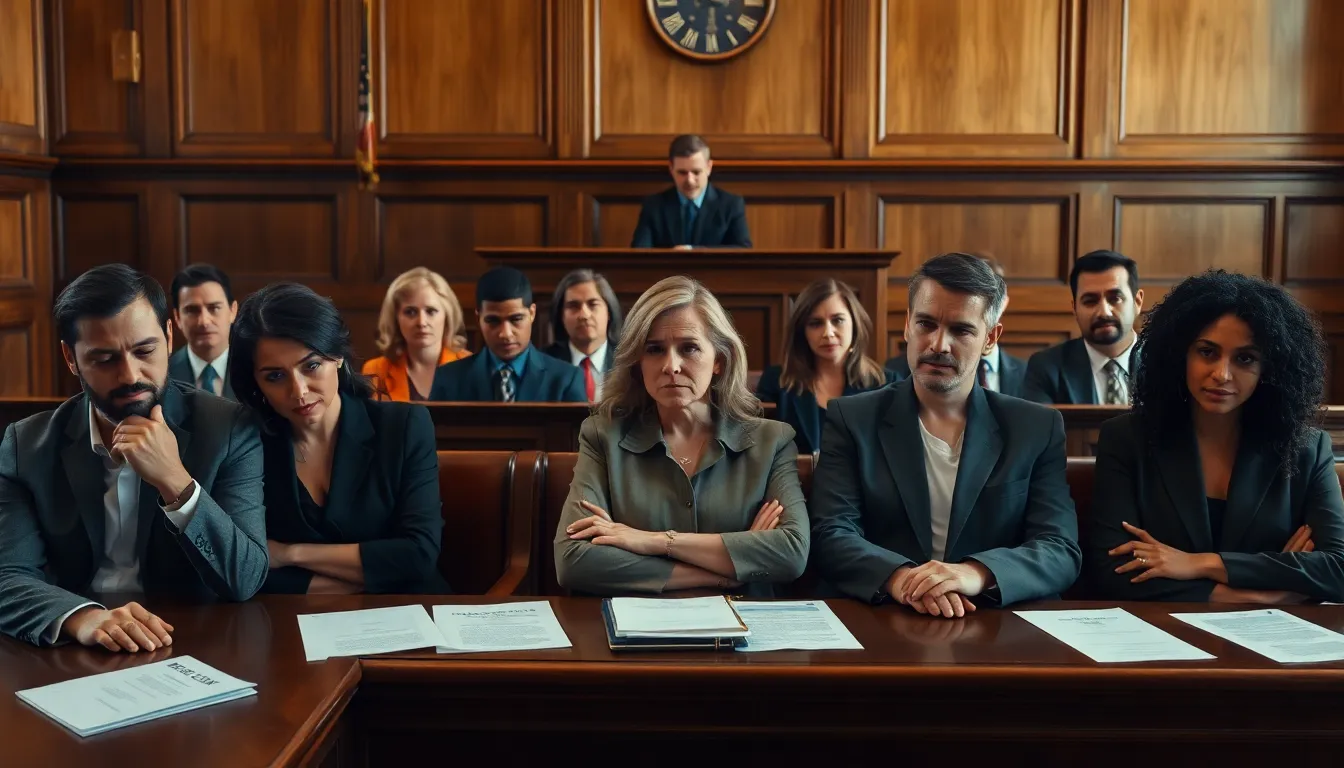 What Does Hung Jury Mean? Understanding Its Impact on Trials and
Does a Hung Jury Help the Defense or the Prosecution?
It depends on the case. For the defense, a hung jury can be seen as a partial victory if they believe the evidence strongly favored acquittal. It shows that at least some jurors were not convinced of guilt beyond a reasonable doubt.
For the prosecution, a hung jury can be frustrating, but it keeps the case alive. If they believe they can persuade a new jury, they may view a mistrial as a setback rather than a defeat.
In practice, both sides often reassess their strategies after a hung jury. The defense may push harder for an acquittal or a favorable plea, while the prosecution may refine its presentation of evidence or narrow the charges.
Hung Jury in the Clancy Trial: What It Means
In the Lindsay Clancy murder trial, the jury reported being deadlocked multiple times over several days of deliberation. After the third deadlock note, Judge William Sullivan declared a mistrial, ending the first trial without a verdict.
For Clancy, the hung jury means that the question of her criminal responsibility for the deaths of her three children remains legally unresolved. She was neither convicted nor acquitted. Prosecutors have indicated they are considering a retrial, which would mean presenting the same core evidence—about the killings, Clancy’s mental health, and the claim of postpartum psychosis—to a new jury.
The deadlock itself highlights how difficult this case was for jurors. They had to weigh disturbing evidence about the children’s deaths against expert testimony on severe mental illness and the legal standard for insanity under Massachusetts law. The fact that the jury could not agree, even after extensive deliberation and a “dynamite” instruction, underscores the deep splits that can arise when mental illness and intentional killing collide in a single case.
Going forward, the hung jury in the Clancy trial may still influence how future courts and juries handle postpartum psychosis defenses. Even without a final verdict, the detailed public record of psychiatric testimony, jury instructions, and legal arguments will likely be studied by lawyers, judges, and mental health advocates for years to come.
Key Takeaways
- A hung jury means the jurors could not reach the required unanimous verdict.
- It leads to a mistrial, not an acquittal, so the defendant is neither convicted nor cleared.
- Prosecutors can usually retry the case with a new jury, negotiate a plea, or, less commonly, dismiss the charges.
- Hung juries are more common in serious, complex, or high-profile cases than in minor offenses.
- A hung jury does not mean the defendant is innocent; it means the first jury could not agree on a final answer.
