Whats A Mistrial Mean

A mistrial is one of the most dramatic outcomes in a criminal case, but its legal meaning is straightforward. Here is what a mistrial is, why it happens, and what it means for...
A mistrial is one of the most dramatic outcomes in a criminal case, but its legal meaning is straightforward. Here is what a mistrial is, why it happens, and what it means for the people involved.
A mistrial occurs when a criminal trial is terminated before it reaches a final verdict. This can happen for many reasons, but the result is the same: the trial ends without a conviction and without an acquittal.
Legally, a mistrial means that the particular proceeding is treated as if it did not produce a binding result. The charges remain in place, and the case can often be tried again.
Must Read
Common Reasons a Mistrial Is Declared
Judges declare mistrials only when something significant goes wrong that prevents a fair and complete trial. Common reasons include:
- Hung jury: The jurors cannot reach the required unanimous (or supermajority) verdict after extensive deliberation.
- Jury misconduct: A juror talks about the case with outsiders, conducts independent research, or is exposed to prohibited media coverage.
- Legal errors: Serious mistakes in procedure, evidence, or jury instructions that cannot be fixed without starting over.
- Illness or emergency: A judge, juror, key attorney, or essential witness becomes unable to continue.
- Prejudicial events: Something happens during the trial—such as improper statements or evidence—that makes it impossible for the jury to remain fair.
Does a Mistrial Mean the Defendant Is Guilty or Innocent?
A mistrial does not mean the defendant is guilty, and it also does not mean they are innocent. It simply means the trial did not end with a valid verdict.
Because there is no acquittal, the constitutional protection against double jeopardy usually does not prevent prosecutors from retrying the case. In many serious cases, the state will choose to file the charges again and proceed with a new trial before a new jury.
What Happens After a Mistrial?
Once a mistrial is declared, several outcomes are possible:
- Retrial: The prosecution can bring the same charges and try the case again with a new jury. This is common in serious felony cases such as murder, rape, or major fraud.
- Plea agreement: To avoid the cost and uncertainty of another trial, the prosecution and defense may negotiate a plea deal, often on reduced charges or with a recommended sentence.
- Dismissal: In some cases, prosecutors may decide not to retry the case, especially if the evidence appears weak, key witnesses are unavailable, or resources are limited.
For the defendant, a mistrial can feel like a limbo. It is not a conviction, but it is also not a clean resolution. The case remains open until prosecutors decide whether to try again or drop the charges.
Hung Jury as the Most Common Cause
The most common reason for a mistrial in criminal cases is a hung jury. This happens when jurors cannot agree on a verdict despite extended deliberation and, in some cases, special instructions from the judge to keep trying.
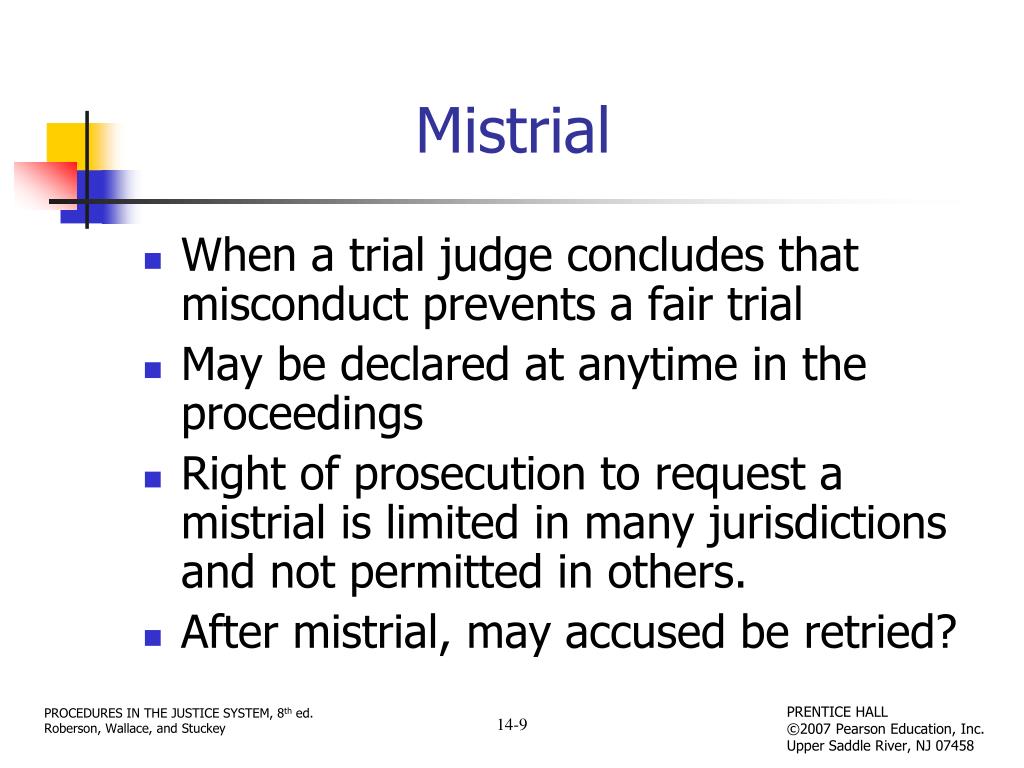 PPT - Unit 8 – CJ227 PowerPoint Presentation, free download - ID:6182955
When it becomes clear that the jury is truly deadlocked, the judge will usually:
- Confirm that further deliberation is unlikely to help.
- Declare a mistrial on the record.
- Discharge the jurors, thanking them for their service.
At that point, the case moves into a new phase, with the prosecution deciding whether to seek a retrial.
Key Takeaways
- A mistrial means the trial ended without a valid verdict—no conviction and no acquittal.
- It is often caused by a hung jury, but can also result from jury misconduct, legal errors, or other serious problems.
- A mistrial does not equal innocence; the charges usually remain and can be tried again.
- After a mistrial, prosecutors can seek a retrial, negotiate a plea deal, or, less commonly, dismiss the case.
- For the defendant, a mistrial leaves the case unresolved and often leads to more months or years of legal uncertainty.
Mistrial in the Lindsay Clancy Trial
In the Lindsay Clancy murder trial, Judge William Sullivan declared a mistrial on Friday, September 4, 2026, after the jury reported being deadlocked for the third time over more than a week of deliberations.
Clancy is charged with three counts of first-degree murder in the strangulation deaths of her children—Cora, 5; Dawson, 3; and Callan, 8 months—on January 24, 2023. She has admitted to killing them but argues that she was not criminally responsible because she was experiencing severe postpartum psychosis.
The jury’s inability to reach a unanimous verdict, even after additional deliberation and a “dynamite” instruction, led Judge Sullivan to conclude that further deliberation would be futile. He formally declared a mistrial, ending the first trial without a guilty or not-guilty verdict.
As a result:
- Clancy was neither convicted nor acquitted.
- The charges remain in place, and prosecutors can choose to retry the case with a new jury.
- The core issues—whether Clancy acted with deliberate intent or was driven by psychosis that destroyed her understanding of right and wrong—will likely be central again if there is a retrial.
The mistrial in the Clancy case underscores how difficult it can be for jurors to reconcile disturbing facts about the children’s deaths with complex psychiatric evidence about postpartum psychosis. It also leaves the legal system, and the public, waiting to see whether the state will seek a second trial and whether a new jury will reach a different conclusion.
